
Valuation Model for an Electronics Startup
3-year projections to support Series A fund raising.
Client Context
An early-stage electronics technology startup was preparing for institutional fundraising following initial commercial traction. The company operated at the intersection of advanced hardware manufacturing and proprietary technology, with a business model combining product sales, recurring revenues, and long-term scalability potential.
While the leadership team had developed detailed financial projections, they lacked a structured valuation framework that could translate operational assumptions into an investor-credible valuation narrative. Existing analyses were fragmented and did not clearly articulate value drivers, capital requirements, or downside risks.
The objective was to build a robust valuation model that could support investor discussions, scenario analysis, and internal strategic planning.
Key Challenges
Complex Cost and Revenue Dynamics
The business exhibited:
High upfront investment in equipment and R&D
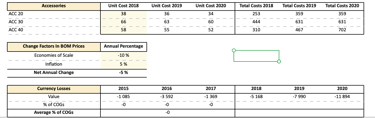
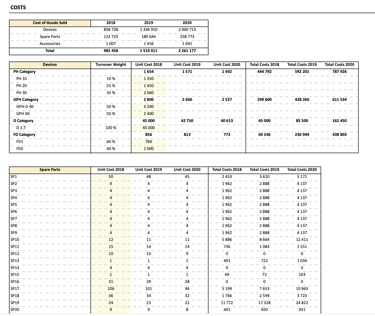
Evolving unit economics as production scaled
Sensitivity to utilization rates, pricing, and cost learning curves
Unclear Link Between Operations and Valuation
While financial forecasts existed, they were not explicitly connected to:
Cash flow generation capacity
Capital intensity and reinvestment needs
Value inflection points tied to scale
This limited management’s ability to justify valuation expectations.
Investor Readiness
The company needed a valuation approach that could:
Withstand financial diligence
Clearly explain assumptions and sensitivities
Be flexibly adjusted for different funding scenarios
Solution Design
A bottom-up valuation model was developed based on the startup’s financial projections and operational assumptions.
Integrated Financial Forecast
The model consolidated:
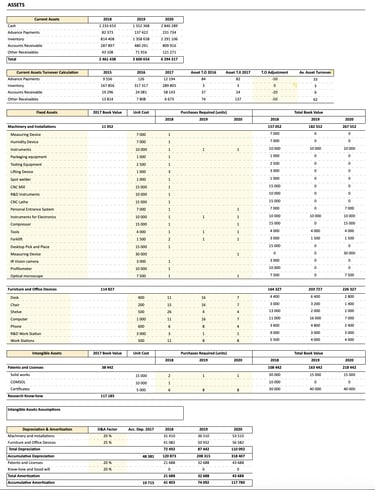
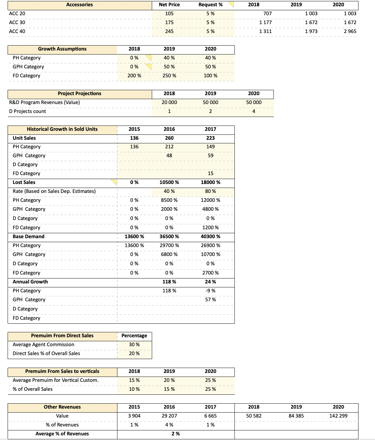
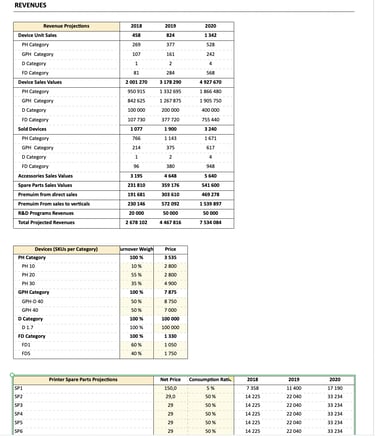
Revenue projections by product and channel
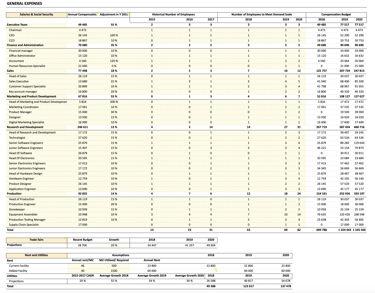
Cost structure evolution (fixed vs. variable components)
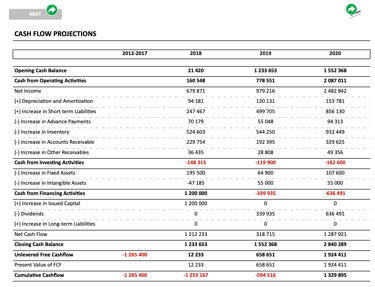
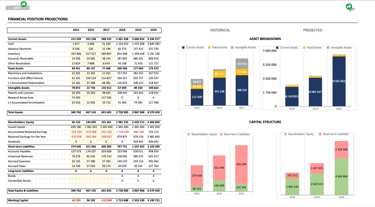
Capital expenditures and working capital requirements
Cash Flow–Driven Valuation Logic
Free cash flows were derived directly from projected performance, enabling:
Discounted cash flow (DCF) valuation
Clear visibility into value creation timelines
Separation of growth value versus operational efficiency gains
Scenario & Sensitivity Analysis
The model allowed management to test:
Different growth and pricing trajectories
Cost optimization and scale-up efficiencies
Funding timing and capital structure impacts
Capital Requirements & Dilution Perspective
The valuation framework incorporated:
Planned funding rounds
Cash runway under alternative scenarios
Implicit dilution effects
Key Deliverables
Startup Valuation Model grounded in detailed financial projections
Scenario & Sensitivity Engine highlighting key value drivers
Investor-Ready Valuation Outputs suitable for pitch decks and discussions
Management Decision Tool for evaluating growth and funding strategies
Business Impact
Clear Valuation Narrative
The startup gained a defensible, transparent valuation story tied directly to operational performance and scalability.
Improved Investor Confidence
The model enabled structured discussions with investors, reducing ambiguity around assumptions and value drivers.
Better Strategic Planning
Leadership could assess how operational decisions—pricing, scaling pace, cost structure—translated into enterprise value.
Funding Readiness
The valuation framework supported capital planning by clarifying funding needs, timing, and dilution implications.
Deliverable Excerpts (Not Exhaustive)

© Hal Praxis 2025. All rights reserved.
Register Code: 304291595
Anapilio 30 Vilnius, Lithuania